Planning a private event for 200 people is no small undertaking. You’ve sorted the venue, the catering, the music. But there’s one thing that quietly makes or breaks the guest experience: the toilets.
Get it wrong and you’ll have queues snaking past the marquee, unhappy guests, and a memory you’d rather forget. Get it right and nobody thinks about it at all, which is exactly the point.
This guide covers everything you need to know about portable toilet hire for a 200-person private event: how many units you actually need, what type to choose, and the logistics that most people overlook until it’s too late.
The short answer for 200 guests: Plan for 4 standard units if alcohol is being served, or 3 if it’s a dry event, plus at least 1 accessible unit. For a private event where guest experience matters, a luxury toilet trailer is almost always the better choice.
How Many Portable Toilets Do You Need for 200 Guests?
The industry standard in the UK follows a clear planning ratio, and it’s worth understanding before you start getting quotes.
The UK planning ratio
- No alcohol served: 1 toilet per 75 guests, minimum 2 units
- Alcohol served: 1 toilet per 50 guests, minimum 2 units
- Accessible provision: at least 1 accessible unit per 10 standard units, with a minimum of 1 at any event
Applied to 200 guests, that works out as follows:
| Scenario | Standard Units | Accessible Unit | Total |
|---|---|---|---|
| Dry event (no alcohol) | 3 | 1 | 4 |
| Event with a bar | 4 | 1 | 5 |
| All-day event with alcohol | 5+ | 1 | 6+ |
These are the same ratios that event licensing teams and local authorities expect to see in an event management plan, according to EventSpeed’s portable toilet hire guide. If you’re hosting a licensed event, getting this right isn’t just good practice, it’s often a condition of your licence.
Why alcohol changes everything
Alcohol significantly increases toilet usage, and the maths reflects that. A 200-person garden party with a free bar will put far more pressure on facilities than a dry afternoon tea. Factor in a long event duration too: if your event runs beyond six hours, consider adding an extra unit or booking a mid-event servicing visit to keep things fresh.
Key takeaway: When in doubt, round up. The cost difference between 4 and 5 units is modest. The cost of unhappy guests is not.
Standard Units vs Luxury Toilet Trailers: Which Is Right for a Private Event?
This is the question most people don’t think to ask until they’ve already booked the wrong thing.
Standard portable toilets (the blue plastic cubicles you see at building sites and festivals) do the job, but they’re designed for utility, not comfort. For a private event, where your guests are friends, family, or colleagues, the experience inside the toilet reflects on you as a host.
Standard portable units
- Lower cost per unit
- Suitable for large-scale or informal outdoor events
- Basic interior: no running water, hand sanitiser only
- Require level ground and easy vehicle access for delivery
- Best suited to festivals, construction sites, or casual outdoor gatherings
Luxury toilet trailers
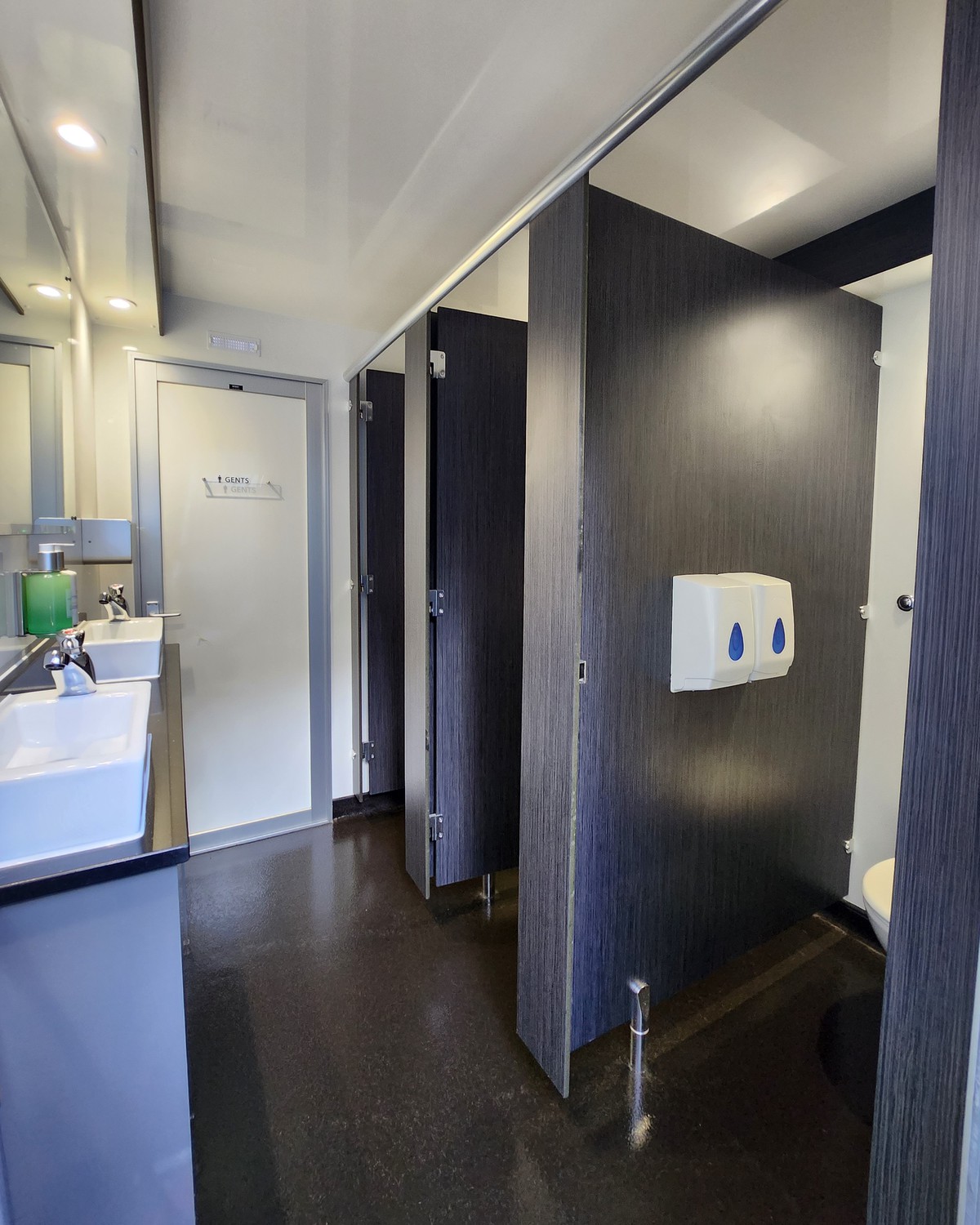
- Self-contained trailers with multiple cubicles, running water, and proper hand-washing facilities
- Interior finish comparable to a hotel bathroom: mirrors, lighting, hand soap, and often fresh flowers
- Guests don’t realise they’re using a portable facility, which is the whole point
- Available in 2+1, 3+1, and 4+1 configurations (female cubicles + male cubicles)
- Delivered, set up, and collected by the hire company
For a 200-person private event, a luxury 3+1 or 4+1 trailer will typically cover your guest numbers comfortably, with the option of a single standard accessible unit alongside it. This is exactly the setup we’d recommend for a garden party, wedding, or milestone birthday celebration.
We’ve seen it time and again: the hosts who spend a bit more on the toilet provision are the ones whose guests comment on how thoughtful the whole event felt. Nobody mentions the loos specifically. They just feel well looked after.
You can explore our luxury toilet hire options to see what’s available, or browse our high-end toilet pods if you’re after something a little more compact.
Logistics to Sort Before You Book
Getting the unit count right is step one. But there are a handful of practical details that catch people out, and it’s worth thinking through these before you confirm your hire.
Site access
Luxury toilet trailers are towed by large vehicles and need a reasonably clear, firm access route. If your venue has a narrow entrance, low-hanging trees, or soft ground, mention this when you enquire. A good hire company will ask about access during the booking process; if they don’t, that’s a red flag.
Power and water
Some luxury trailers are fully self-contained with onboard water tanks and lighting. Others require a mains water connection or a generator. Clarify this upfront so there are no surprises on the day.
Placement
Think about where the units will sit in relation to your event space. You want them:
- Close enough to be convenient for guests
- Far enough away that they’re not a focal point or visible from the main dining area
- On firm, level ground with adequate space around them for the door to open fully
- Accessible for the delivery vehicle on the morning of the event
Duration and servicing
For an event lasting more than six hours, or one with heavy alcohol consumption, a mid-event servicing visit is worth considering. This keeps the facilities clean and fully stocked throughout. Ask your hire company what’s included in the base price and what costs extra.
Booking lead time
For peak season events (May to September in particular), luxury toilet trailers book up quickly. If your event is in summer, aim to confirm your hire at least 8 to 12 weeks in advance. Last-minute availability does exist, but the best units go early.
What Does Portable Toilet Hire Cost for a 200-Person Event?
Pricing varies depending on unit type, hire duration, location, and the time of year. Here’s a rough guide to help you budget:
| Unit Type | Typical Weekend Hire Cost (excl. VAT) |
|---|---|
| Standard portable unit | £60 to £110 per unit |
| Accessible portable unit | £90 to £150 per unit |
| Luxury 3+1 toilet trailer | £600 to £1,200+ |
| Luxury 4+1 toilet trailer | £800 to £1,500+ |
For a 200-person event with a bar, a luxury 4+1 trailer plus one accessible unit is a realistic setup. Total hire costs typically land somewhere between £900 and £1,700 depending on your location and the specific units chosen.
That might feel like a significant line item, but consider the alternative: a queue of 20 guests waiting in the dark for a basic plastic cubicle is not the memory you want them taking home.
A few things that affect your final quote:
- Distance from the hire company’s depot (delivery charges vary)
- Whether you need a mid-event service visit
- Peak season surcharges (summer weekends command premium rates)
- Site-specific access requirements
The best way to get an accurate figure is to get in touch with us directly. We’ll take your guest count, event duration, and site details, and come back with a clear recommendation and a no-obligation quote.
The GigLoo Difference
We design and build our toilet trailers in-house, which means we control the quality from the ground up. Our units are built to last, finished to a high standard, and designed with both guest experience and environmental impact in mind.
We cover events across southeast England and beyond, from intimate garden parties to large-scale weddings and corporate events. If you’re planning a private event for 200 guests and want toilet facilities that genuinely impress, we’d love to help.
A few things that set us apart:
- Award-winning, in-house designs built for durability and style
- Eco-conscious approach using recyclable materials and sustainable practices
- Flexible hire options from single-day events to long-term hire
- Experienced team who’ll help you work out exactly what you need, not just sell you more units than necessary
Take a look at our how to choose portable toilet hire guide if you’d like more detail on what to look for when comparing suppliers, or get in touch and we’ll take it from there.