Written by the GigLoo team, luxury portable toilet and shower hire specialists serving Sussex, Surrey, Kent, Hampshire, London and the wider South East. Last updated August 2026.
Quick answer: what is site toilet hire and what does the law require?
Site toilet hire is the temporary supply, delivery, servicing and collection of portable toilets and welfare facilities for construction sites, building projects and other work locations that have no permanent plumbing. Under the Construction (Design and Management) Regulations 2015 (CDM 2015), every construction site in Great Britain must give workers access to toilets, hand washing with hot and cold water, drinking water, somewhere to change and store clothing, and a warm place to rest and eat. The industry benchmark (BS 6465-1) is roughly one toilet for every seven workers on a standard 40-hour week. Flushing toilets are preferred, but self-contained or chemical units are allowed where mains connection is not possible. For a compliant setup on your project, get a tailored site toilet and welfare hire quote from GigLoo.
That is the short version. Below we explain exactly what the regulations require, how many units you need, the types of welfare unit you can hire, what it costs, and how to keep a busy site clean and compliant from first fix to handover.
What is site toilet hire?
Site toilet hire means bringing in temporary toilets and washing facilities for a construction site or work location where there is no permanent plumbing, or not enough of it. A unit is delivered, positioned, connected to a water and waste supply where one exists, then serviced and collected when the job ends. It is the go-to solution for new builds, groundworks, refurbishments, civils projects, utilities work and any site where trades need proper facilities close to where they work.
Unlike event or party hire, construction hire is judged on reliability, servicing and compliance rather than looks. A site loo has to cope with heavy daily use, muddy boots and long programmes that can run for months, so servicing frequency and hard-wearing units matter far more than styling. This is why most builders choose a long-term hire arrangement rather than a one-off drop. You can see the full range on our long-term site hire page.
What welfare facilities does the law require on a construction site?
This is where site hire differs from every other kind. Welfare on construction sites is not optional or a nice-to-have, it is a legal duty. Under CDM 2015, the main contractor must make sure suitable welfare facilities are provided from the very start of the build, and Schedule 2 of the regulations sets out exactly what “suitable” means.
In plain English, everyone working on the site must have access to:
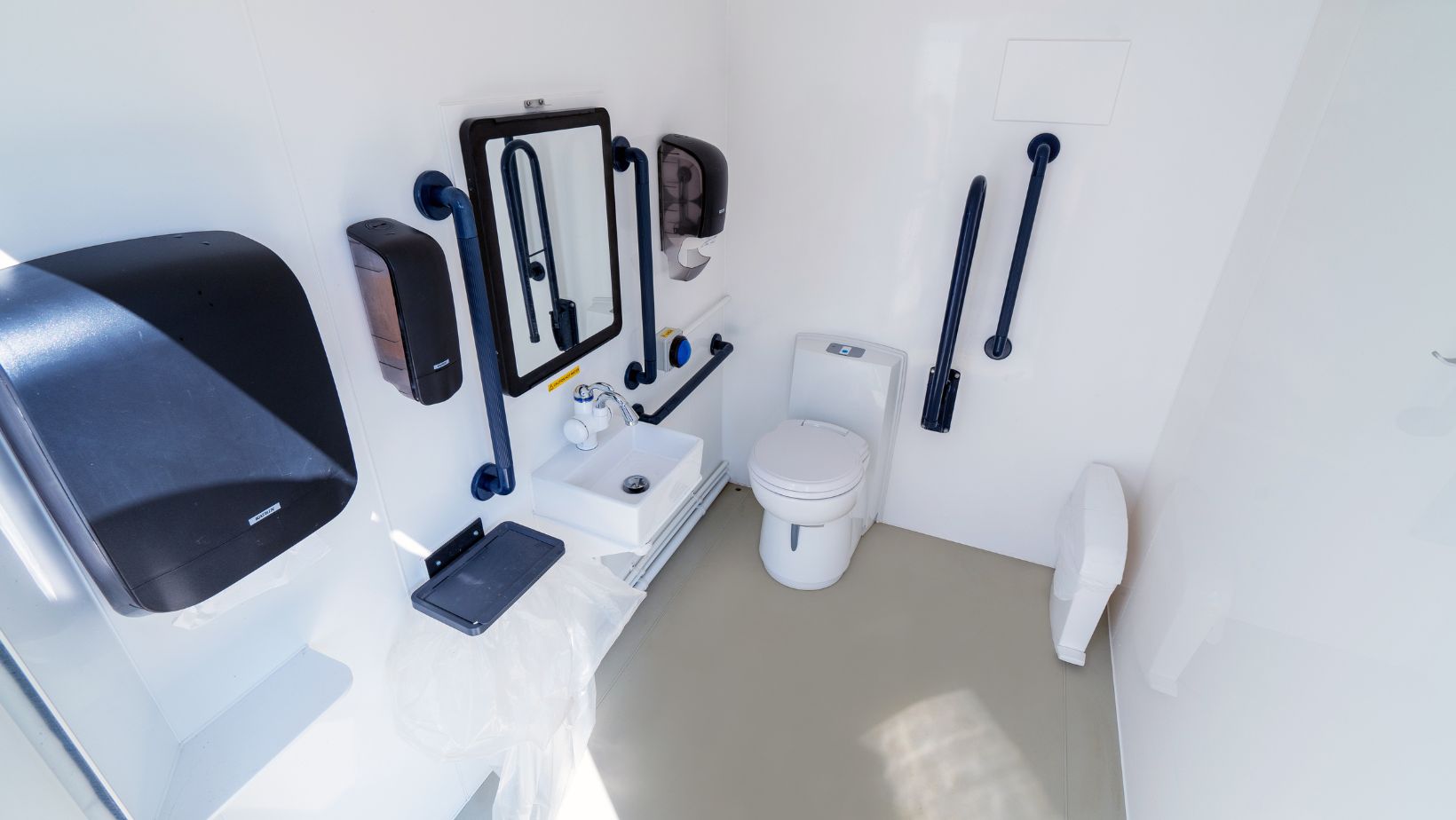
- Toilets, flushing where possible, connected to mains water and drainage or fitted with a built-in water and waste tank.
- Washing facilities next to the toilets and changing area, with hot and cold (or warm) running water, soap and a way to dry hands.
- A supply of drinking water, clearly marked, with cups unless it is a drinking fountain.
- Somewhere to change and to store clothing and personal protective equipment, kept dry and secure.
- A rest area for breaks and eating, warmed, with somewhere to sit, boil water and heat food.
The Health and Safety Executive (HSE) is clear that these facilities must be available before work starts, not bolted on later. Chemical toilets are accepted where flushing units cannot be provided, which is common at the very start or end of a project, but they must still be kept clean and serviced. If you are unsure what your project needs, the HSE guidance note CIS59 on welfare provision is the definitive reference, and our team plans every site hire around it.
How many toilets do you need on a construction site?
The recognised benchmark comes from the British Standard BS 6465-1, which recommends roughly one toilet for every seven people working a standard 40-hour week. That ratio is the number HSE inspectors and principal contractors work to, so it is the safest planning figure to use. As the workforce grows across a project, the number of units should grow with it.
Here is a simple planning guide based on that standard. Always round up, never down, and add urinals to ease pressure on cubicles on male-heavy sites.
| Workers on site | Toilets (minimum) | Typical setup |
|---|---|---|
| 1 to 7 | 1 | Single self-contained portaloo |
| 8 to 14 | 2 | Two cubicles or a small welfare unit |
| 15 to 21 | 3 | Units plus a urinal block |
| 22 to 28 | 4 | Welfare unit plus extra cubicles |
| 29 to 35 | 5 | Multiple units split across the site |
Two points builders often miss. First, washing facilities scale with the toilets, so more loos means more sinks with running water, not just hand gel. Second, on a mixed workforce you must provide facilities that suit everyone on site, including female workers and anyone who needs an accessible unit. For the inclusive side of provision, see our guide to accessible toilet hire.
What types of site toilet and welfare unit can you hire?
Site hire is not one product. The right mix depends on how many people are on site, how long the job runs, and whether you have water and power on the plot yet.
Standard site portaloo
The self-contained single cubicle with a chemical tank, non-slip floor and hand sanitiser. Quick to drop in banks across a large plot, ideal for early groundworks before services are in, and the cheapest way to get compliant fast.
Mains-connect and self-fill flushing toilets
A step up in comfort, with a proper flush. Connected to mains water and drainage where available, or fed from an on-board tank where not. Better for longer programmes and busier sites where a chemical unit alone would not keep pace.
Welfare units and cabins
An all-in-one towable or static unit that combines toilets, a washing area with hot water, a canteen or rest space with seating and a means to heat food, and sometimes drying and charging. A single welfare unit can meet several Schedule 2 duties at once, which is why it is the popular choice for established sites.
Urinal blocks, showers and drinking water
Add-ons that finish the setup. Urinals take pressure off cubicles, showers matter on dirty trades and long civils jobs, and a marked drinking water point is a legal requirement. For washing off at the end of a shift, pair your toilets with portable shower hire.
| Unit type | Best for | Key features |
|---|---|---|
| Single site portaloo | Early works, quick compliance | Self-contained, chemical tank, low cost |
| Flushing toilet | Longer, busier sites | Mains or tank-fed flush, more comfort |
| Welfare unit or cabin | Established sites, full programme | Toilets, hot wash, rest and canteen space |
| Urinal block | Male-heavy sites | Eases cubicle demand, high throughput |
| Site shower | Dirty trades, long jobs | Hot water, private, non-slip floor |
Do you need showers and drinking water on site too?
Drinking water, yes, always. A clearly marked, wholesome supply of drinking water is a Schedule 2 requirement on every site, with cups unless it is a fountain. Showers are not a blanket legal requirement, but the HSE expects them where the work is particularly strenuous or dirty, or where workers are exposed to substances that need washing off, such as certain groundworks, demolition or contaminated land. On projects like these a shower is part of proper welfare, not a luxury. If your trades finish each day covered in muck, a hot portable shower alongside the toilets keeps the site safe and the workforce happy.
How much does site toilet hire cost in 2026?
Site hire is priced on the type of unit, how long you need it, how often it is serviced, how far it travels and whether it connects to mains services or runs self-contained. Because construction hires usually run for weeks or months, they are almost always quoted on a weekly or monthly rate that works out far cheaper per day than a weekend event hire.
As a planning guide for the UK in 2026, typical figures look like this. These are indicative and exclude delivery, servicing, water and waste, and VAT.
| Unit | Typical weekly hire | Typical monthly hire |
|---|---|---|
| Single site portaloo | £15 to £30 | £45 to £90 |
| Flushing toilet | £25 to £50 | £80 to £160 |
| Welfare unit or cabin | £60 to £150 | £200 to £500 |
| Site shower unit | £40 to £90 | £150 to £350 |
The biggest levers on price are the hire length, because longer jobs drop the weekly rate, and the servicing schedule, because a busy site needs emptying and cleaning more often. Delivery distance from our base and whether the unit is self-contained or mains-connected also play a part. For a fuller breakdown of what drives the numbers, read our portaloo hire cost guide, then get an exact figure for your project with a quick quote.
Short-term or long-term site hire: which do you need?
Most construction projects suit long-term hire, where units stay on site for the duration of the build and are serviced on a regular schedule. This gives you a predictable monthly cost, guaranteed servicing and one less thing to manage as the programme moves through its phases. Short-term hire suits quick jobs, one-week fit-outs, snagging visits or emergency cover when a mains toilet fails. Either way, the servicing schedule is the part that keeps you compliant, so agree it up front rather than leaving it to chance. See how ongoing cover works on our long-term hire page.
A quick site welfare checklist
Before your first trade arrives, run through this:
- Toilets in place and working from day one, roughly one per seven workers.
- Washing facilities next to the toilets with hot and cold water, soap and hand drying.
- A marked drinking water supply.
- A dry, secure place to change and store clothing and PPE.
- A warm rest area to sit, eat and boil water.
- Showers where the work is dirty or strenuous.
- Accessible provision for any worker who needs it.
- A servicing schedule agreed and booked for the whole programme.
Tick all of these and your site meets its CDM 2015 welfare duties.
Get compliant site toilet and welfare hire
Whether you need a single portaloo for early groundworks or a full welfare setup for a multi-month build, GigLoo supplies and services construction site toilets, welfare units and showers across Kent, Sussex, Surrey, Hampshire, London and Reading. We plan every hire around HSE welfare guidance and keep your site serviced from first fix to handover. Contact the GigLoo team for a fast, tailored quote, or browse our long-term site hire options to get started.
Frequently asked questions
Are toilets a legal requirement on a construction site?
Yes. Under CDM 2015, every construction site in Great Britain must provide suitable toilets, washing facilities, drinking water, changing and storage space, and a rest area from the start of the work. The duty sits mainly with the principal contractor.
How many toilets do I need on a building site?
The recognised benchmark is BS 6465-1, which recommends around one toilet for every seven workers on a standard 40-hour week. Increase the number as the workforce grows, and add urinals and washing points to keep pace.
Can I use chemical toilets on a construction site?
Yes, where flushing toilets cannot be connected, which is common at the very start or end of a project. Chemical units are accepted by the HSE as long as they are kept clean and serviced regularly.
Do I need showers on a construction site?
Not on every site, but the HSE expects showers where the work is especially dirty or strenuous, or where workers are exposed to substances that need washing off. Drinking water and washing facilities, by contrast, are required on all sites.
How much does it cost to hire a site toilet?
As a 2026 planning guide, a single site portaloo is typically around £15 to £30 a week, and a full welfare unit from around £60 to £150 a week, before delivery, servicing and VAT. Longer hires cost less per week, so ask for a project-length quote.